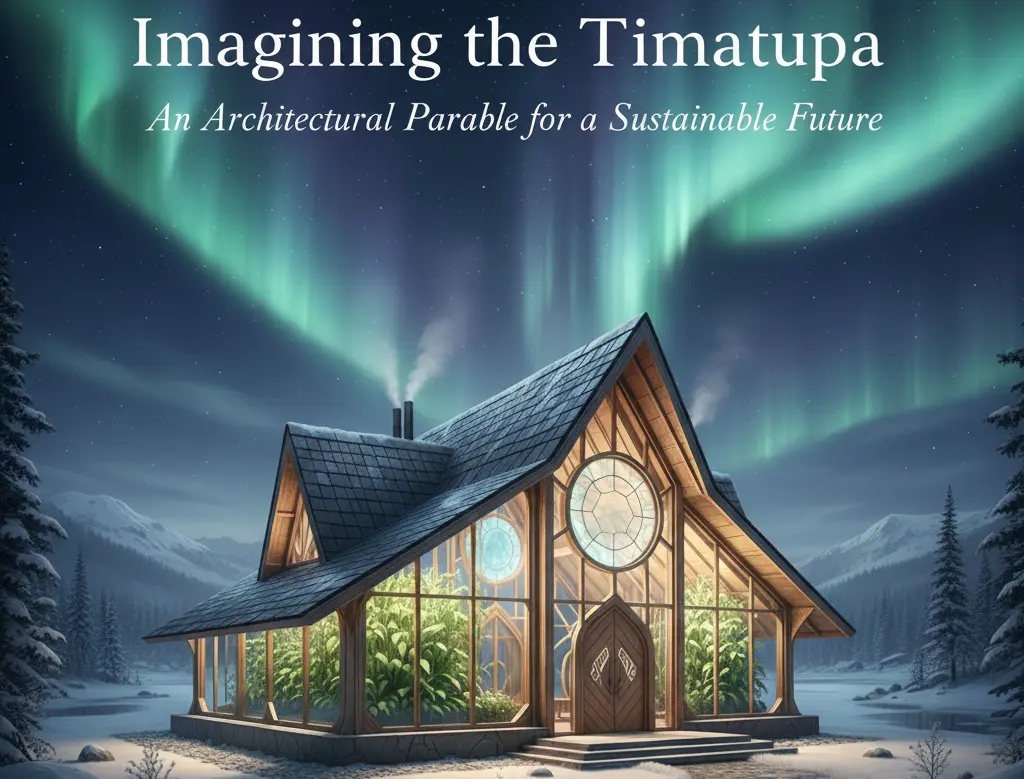
What if a culture developed an architecture that perfectly embodied sustainability, community, and innovation? Let us explore a compelling thought experiment, a piece of architectural fiction inspired by the deep woods and resilient spirit of Finland: the Tiimatupa. While not a historical reality, this concept serves as a powerful parable a blueprint for a way of building and living that feels both ancient and urgently necessary. It imagines a structure born from the wilderness that is not just a shelter, but a philosophy for collaboration and a critique of modern excess.
This guide delves into the world of the imagined Tiimatupa, exploring its conceptual roots, its key architectural principles, and its profound cultural significance as a fictional symbol. We will examine how this powerful idea, though born of imagination, can serve as a blueprint for genuine sustainable living, inspire green innovation, and provide a potent metaphor for modern teamwork.
What Exactly is the Tiimatupa Concept?
The Tiimatupa is a conceptual Finnish vernacular structure built with hyper-local materials and an emphasis on communal living. It is an architectural fiction, a “what if” scenario that blends historical Finnish building traditions with an idealized philosophy. The term refers to both the imagined building and the ethos it represents: a way of life rooted in radical resourcefulness, shared purpose, and a symbiotic relationship with the natural world.
Conceptual Roots in the Finnish Wilderness
The lore of the Tiimatupa places its origins in the practical necessities of surviving Finland’s rugged landscapes. In this imagined history, these structures were not imposed upon the environment but grew from it, an architectural expression of sisu that quintessentially Finnish grit and perseverance. This narrative suggests that early builders, guided by a deep respect for the natural world, would have used immediately available materials to create shelters that were both resilient and minimally impactful, establishing a legacy of environmental stewardship that defines the concept.
Key Architectural Features of a Tiimatupa
The design of a theoretical Tiimatupa is guided by principles of efficiency and natural harmony. Its core features reflect this imagined ethos:
- Hyper-Local, Natural Materials: A Tiimatupa would be constructed almost exclusively from materials sourced from its immediate surroundings. This means robust timber from local forests for the frame and walls, and fieldstone for the foundation and central hearth, minimizing its embodied energy and environmental footprint.
- An Ethos of Radical Utility: The Tiimatupa design philosophy rejects ornamentation. Every joint, beam, and opening is an intentional response to functional need and environmental context, ensuring that space and resources are used with maximum efficiency.
- Community-Centric Layout: The internal space is envisioned as a large, open area centered around a hearth. This layout is deliberately crafted to dismantle hierarchy and foster group interaction, making it a natural hub for family life or collaborative work.
- Harmony with Nature: A Tiimatupa is designed to blend seamlessly into its landscape. Its imagined siting, orientation, and materials are all chosen to complement the natural environment, reflecting a philosophy of co-existence rather than dominance.
More Than a Building: The Imagined Cultural Significance
Within this architectural fiction, the Tiimatupa holds deep cultural importance. It stands as a physical embodiment of cherished Finnish values: resilience, practicality, and a profound connection to the land. It would have been the heart of rural homesteads, a central gathering place for work, storytelling, and mutual support an enduring symbol of a community’s strength.
The Tiimatupa as a Blueprint for Sustainable Living
In an era of disposable design and complex supply chains, the Tiimatupa philosophy serves as a powerful critique, challenging us to return to principles of localism and permanence. Its inherent focus on minimal impact, energy efficiency, and durable construction provides a timeless blueprint for contemporary eco-friendly architecture and a more mindful, sustainable lifestyle. It reminds us that building modestly and with respect for natural cycles is not a new trend, but a form of ancestral wisdom worth reclaiming.
Powering Green Innovation and Technology
The Tiimatupa concept, though fictional, is a fertile ground for inspiring real-world green innovation. For example, engineers are now studying the theoretical “thermal hearth” principle of the Tiimatupa where a central stone mass absorbs daytime heat from the sun and radiates it through the night to develop battery-free, passive heating systems for off-grid housing. This is a perfect example of how an imagined past can provide elegant solutions to modern problems.
From Rustic Shelter to Modern Teamwork
Beyond architecture, the Tiimatupa has emerged as a compelling metaphor for collaboration in business and creative fields. The idea of a group working together efficiently within a single, shared space mirrors the layout of a traditional Tiimatupa, providing a powerful framework for fostering open communication, shared purpose, and rapid innovation.
How Tiimatupa Principles Foster Collaboration
The connection between the Tiimatupa structure and effective teamwork is based on core principles that translate directly to the modern workplace.
- Shared Space: The open, communal layout removes physical and hierarchical barriers, encouraging spontaneous conversation, transparent communication, and a collective sense of ownership over projects.
- Resourcefulness: The same spirit of resourcefulness that guided early builders to use fallen timber and fieldstone can be channeled by modern teams to foster ingenuity. This ethos promotes creative problem-solving and efficiency, urging teams to make the most of their available resources.
Getting Started with the Tiimatupa Philosophy
You don’t need to build a physical structure to benefit from the Tiimatupa concept. Its philosophy can be applied through simple, practical actions. Consider creating a dedicated collaborative “hearth” in your office or home where your team can gather without barriers. When approaching a new project, adopt a resourceful mindset by first asking what you can achieve with the tools you already have. These small shifts can cultivate a culture of efficiency and shared purpose.
Can You Visit or Build a Tiimatupa Today?
Since the Tiimatupa is an architectural concept rather than a historical structure, you cannot visit an “original” one. However, the principles it represents simplicity, local materials, and community focus are alive and well in many modern Finnish cabins and community centers. To build a Tiimatupa today would be to bring this compelling fiction to life, a project requiring deep knowledge of traditional log construction and sustainable practices to honor the spirit of the parable.
Frequently Asked Questions about the Tiimatupa Concept
What does the word “Tiimatupa” mean?
The name “Tiimatupa” is a modern invention, a plausible Finnish-sounding portmanteau created to give life to this architectural concept. It cleverly combines “tiimi” (team) and “tupa” (a rustic cottage or room), perfectly capturing the philosophy of a “team cabin” or “work cottage.”
Are Tiimatuvat related to the Finnish sauna?
In the world imagined for the Tiimatupa, it would exist alongside the sauna as a cornerstone of Finnish life. While the sauna is a real and sacred space for bathing and spiritual cleansing, the fictional Tiimatupa would be its counterpart for communal work and living.
What are the primary materials used to build a Tiimatupa?
The concept dictates the use of primary materials found locally in the Finnish environment. This includes sturdy, naturally insulating timber such as pine or sprucen for the walls and structure, and local stone for the foundation and central hearth.
Is the Tiimatuvat concept used outside of Finland?
While the imagined structures are rooted in a Finnish context, the philosophy of the Tiimatupa is gaining international recognition. Its principles of sustainability, community, and resourcefulness are inspiring architects, business leaders, and designers worldwide.
The Enduring and Evolving Legacy
The Tiimatupa is a powerful and multifaceted parable. It is at once an architectural thought experiment, a masterclass in sustainable design, and a modern metaphor for effective collaboration. It teaches us that true innovation often involves looking to an imagined past and that living in harmony with our environment is a timeless tradition worth striving for.
As the world grapples with challenges of sustainability and social disconnection, the principles embodied by this fictional Finnish structure are more relevant than ever. The enduring legacy of the Tiimatupa is not in timber walls that never existed, but in the vital questions it forces us to ask: Have we forgotten how to build with purpose? And can we reclaim this kind of ancestral wisdom to design a more resilient future?